
How to Prevent Winter Frost Damage to Your Retaining Walls
Canadian winters are famously tough on our homes and properties, and the unpredictable freeze-thaw cycles we experience here in London, ON, can be particularly harsh on outdoor structures. If you have recently invested in upgrading your property, the last thing you want to see come spring is a leaning, cracked, or completely collapsed landscape feature.
Retaining walls do a lot of heavy lifting. They hold back tons of soil, create usable terraced spaces on sloped properties, and add incredible visual appeal to your yard. However, when temperatures plummet and moisture in the ground freezes, these structures face immense pressure from the earth behind them.
Understanding how winter weather affects your hardscaping is the first step in protecting your investment. By addressing drainage, choosing the right materials, and performing a bit of seasonal maintenance, you can keep your property looking pristine year after year. Let's explore the science behind winter wall failure and how to ensure your landscaping survives the deep freeze intact.
Understanding the Threat: What is Frost Heave?
To understand how to prevent frost heave behind retaining walls, we first need to look at what causes it. Frost heave occurs when water trapped in the soil freezes and expands. Because water expands by about nine percent when it turns to ice, this creates a tremendous amount of outward and upward force.
When this expansion happens in the soil directly behind a retaining wall, the ice acts like a slow-moving hydraulic press. It pushes the soil outward against the back of the blocks or stones. Over a single winter, this might only move the wall a fraction of an inch. But over several seasons of freezing and thawing, this repetitive pressure will inevitably cause the structure to bow, crack, or tip over completely.
In our region, the problem is compounded by our variable climate. We often get significant rain or snowmelt followed by a deep freeze, ensuring the soil is heavily saturated right before the temperature drops. Preventing this damage requires a proactive approach to managing soil moisture.
Essential Retaining Wall Drainage Solutions for Winter Freeze
The golden rule of retaining wall construction is that water is the enemy. The most effective way to stop frost heave is to remove the moisture from the soil behind the wall before it has a chance to freeze. Proper drainage is not just a recommendation; it is an absolute necessity for structural integrity.
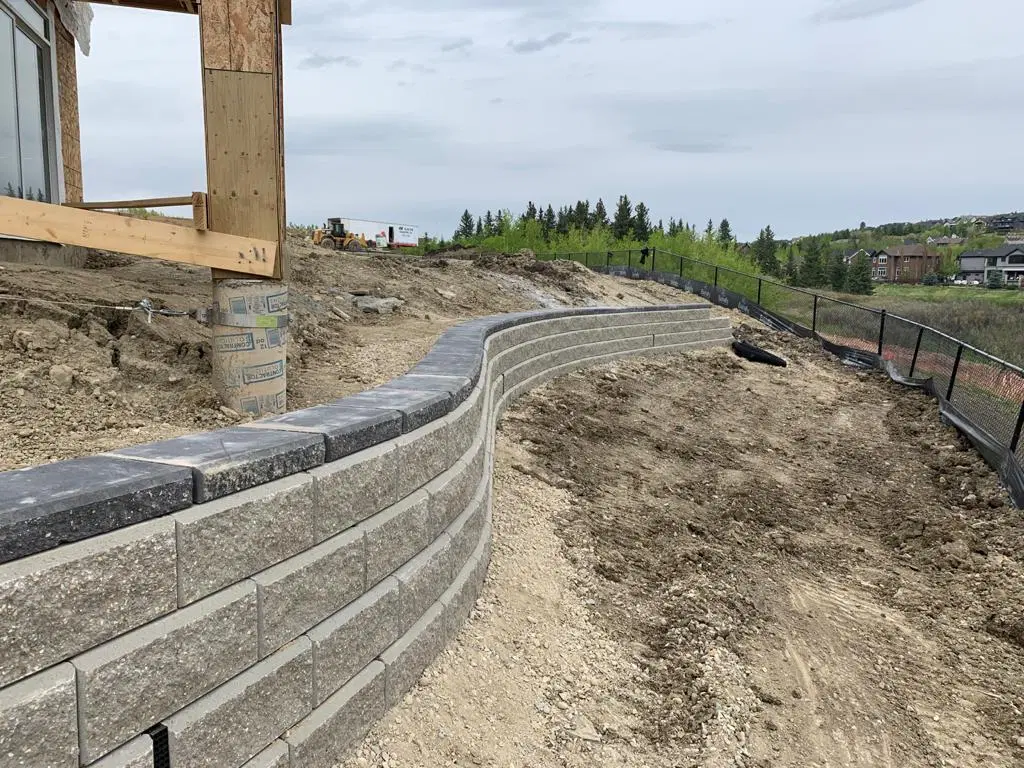
When planning a retaining walls installation, professionals will incorporate a multi-layered drainage system. First, a generous layer of clear, crushed gravel must be placed directly behind the wall. Unlike soil, which acts like a sponge, gravel does not hold water. It allows moisture to fall quickly to the bottom of the trench.
At the base of this gravel backfill, a perforated weeping tile (or drainage pipe) should be installed. This pipe collects the water that filters down through the gravel and directs it safely away from the wall and the foundation of your home. Depending on the size of the wall, weep holes may also be built into the face of the structure to allow excess water to escape directly through the front.
If your current wall lacks these features, you may notice water pooling behind it during heavy rains. Addressing these drainage issues before winter arrives is crucial to preventing catastrophic structural failure.
Protecting Stone Retaining Walls from Freeze Thaw Cycles
The materials used in your landscaping play a massive role in how well it withstands the winter. Rigid structures, like solid poured concrete without proper reinforcement, are highly susceptible to cracking under the pressure of frost heave because they cannot flex.
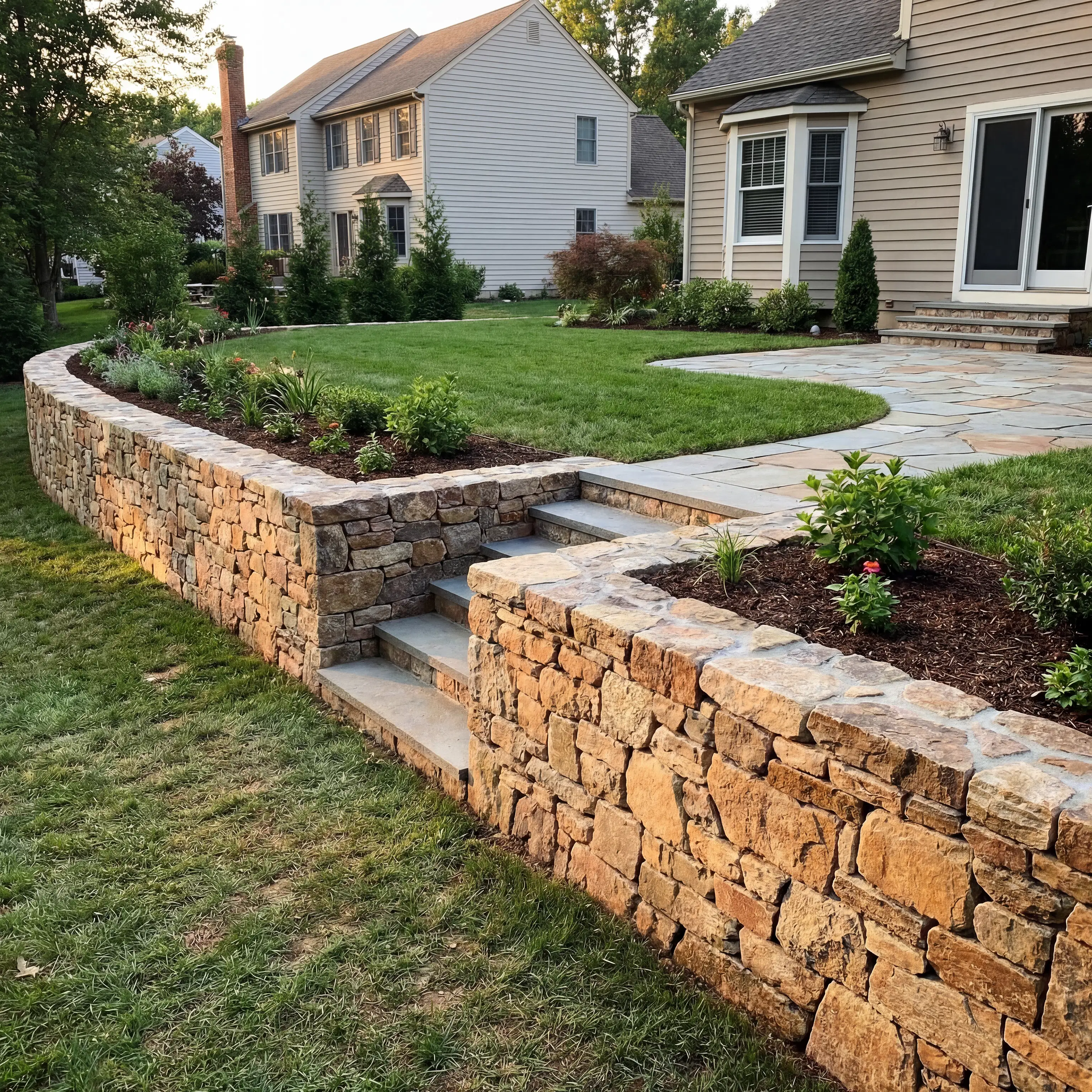
This is why segmental block walls and natural stone are generally preferred for retaining earth in cold climates. Segmental blocks are designed to interlock but are installed without mortar. This dry-stacked method allows the wall to flex microscopically as the earth shifts. If the ground freezes and expands, the stones can move slightly without cracking, and then settle back into place when the ground thaws in the spring.
Choosing high-quality natural stone also adds an element of unmatched durability. Dense stones resist water absorption, meaning they won't crack or flake apart when surface moisture freezes. Beyond the aesthetic beauty, a properly constructed dry-stacked stone wall is an incredibly resilient choice for Canadian properties.
Pre-Winter Maintenance Tips for Homeowners
While proper installation is the most critical factor in longevity, there are several things you can do each fall to protect your landscaping from winter damage.
First, inspect the grading around your property. Ensure that the soil at the top of your wall slopes slightly away from the back of the structure. You do not want surface runoff flowing toward the wall and saturating the backfill.
Second, check your eavestroughs and downspouts. A surprisingly common cause of wall failure is a downspout that discharges rainwater directly behind a garden wall. Ensure your gutters are clean and extend downspouts so they direct water well away from your hardscaping.
Finally, be mindful of where you pile snow. When shoveling your driveway or walkways, try to avoid piling heavy, dense snow directly on top of small garden retaining walls. When this massive pile melts in the spring, it will super-saturate the ground right where you least want it, increasing the risk of spring movement.

Keep Your Landscape Looking Beautiful Year-Round
Your outdoor spaces are an extension of your home, and investing in high-quality landscaping should bring you peace of mind, not seasonal stress. By ensuring your structures have adequate drainage, utilizing flexible and durable materials, and staying on top of fall maintenance, you can protect your property from the worst of winter's wrath.
If you have noticed your current walls starting to lean, or if you are planning a new project and want to ensure it is built to survive the Canadian climate, we are here to help. The team at Hoffman Maintenance & Contracting has the local expertise required to build resilient, beautiful outdoor structures in London and the surrounding areas. From comprehensive maintenance & contracting services to custom installations, we focus on craftsmanship that lasts.
Ready to safeguard your property or start planning your next project? Reach out to us through our contact us page to schedule a consultation.