
Late Summer Sodding and Yard Grading Guide: Setting Your Lawn Up for Success
As the intense summer heat begins to mellow into cooler evenings, many homeowners look at their patchy, tired lawns and wonder if they've missed their window to achieve a lush, green yard this year. The good news is that late summer is actually an incredibly strategic time to revitalize your outdoor space. In fact, tackling a lawn replacement before the autumn leaves begin to fall can save you time, money, and frustration down the road.
However, simply throwing down a layer of green won't solve underlying property issues. For homeowners in London, ON and surrounding areas, our notorious heavy soil—often affectionately or frustratedly referred to as London clay—presents unique challenges for water drainage and root development. If you've ever dealt with a swampy backyard after a heavy rainfall or watched water pool dangerously close to your foundation, you know exactly how stressful poor drainage can be.
This guide explores why late summer is the perfect season for lawn renovations, how essential yard grading techniques before sod installation can permanently fix your drainage nightmares, and the steps you can take right now to prepare your property for the coming winter.
The Perfect Window: The Best Time of Year to Lay Fresh Sod
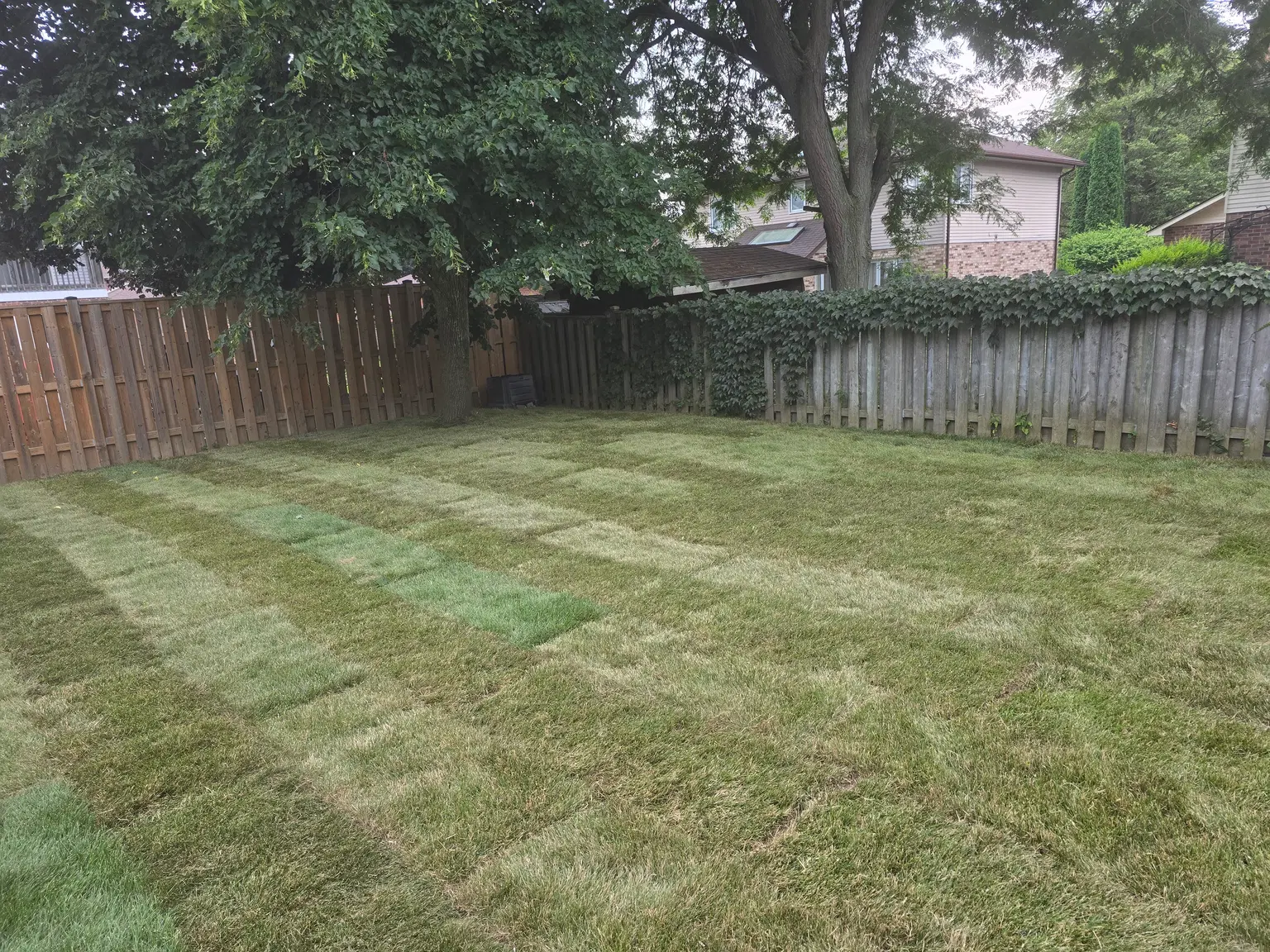
One of the most common questions we hear is regarding the timing of lawn installations. While spring is undeniably a popular season for landscaping, late summer offers distinct, scientifically proven advantages for establishing root systems with late summer sodding.
During late August and early September, the soil retains the deep warmth it accumulated over the summer months. Warm soil encourages rapid root growth, which is exactly what fresh sod needs to anchor itself securely. Simultaneously, the air temperatures begin to cool down, reducing the extreme stress and evaporation rates that occur during July heatwaves. This combination creates an ideal incubator for new grass.
Furthermore, this timing perfectly aligns with nature's schedule. By laying sod in late summer, you give the grass several weeks of moderate weather to develop deep, robust roots before the ground freezes. When the snow eventually melts next spring, your lawn will already be established, healthy, and ready to outcompete early-season weeds.
The Crucial Role of Yard Grading Before Sod Installation
A beautiful lawn is only as good as the foundation it sits on. If you lay premium sod over an uneven yard with poor drainage, you will inevitably end up with dead spots, fungal diseases, and a muddy mess. This is why proper yard grading techniques before sod installation are absolutely non-negotiable.
Grading involves reshaping the land to ensure that water flows predictably and safely away from your home's foundation and prevents pooling in low-lying areas. With the heavy clay soil common in our region, water doesn't drain vertically very well; it tends to sit on the surface or run off sideways.
Professional grading assesses the natural topography of your yard and strategically slopes the soil. Sometimes this involves removing excess clay, bringing in high-quality, loamy topsoil to improve soil structure, and ensuring a smooth, even base. By investing in professional grading and sodding, you are fundamentally fixing the drainage mechanics of your property. It’s an upfront investment that prevents expensive water damage to your foundation and ensures your new lawn has the proper aeration and drainage required to thrive.
Preventing Lawn Erosion on Slopes with New Sod
If you live in a neighborhood with rolling terrain—perhaps near the Thames River or the hilly landscapes of Byron—you face an additional challenge: erosion. Heavy rains can easily wash away topsoil, seeds, and even newly laid sod on sloped properties.
Preventing lawn erosion on slopes with new sod requires a multi-layered approach. Sod is inherently better for slopes than grass seed because the mature root mat instantly stabilizes the top layer of soil, preventing it from washing down the hill during the next rainstorm.
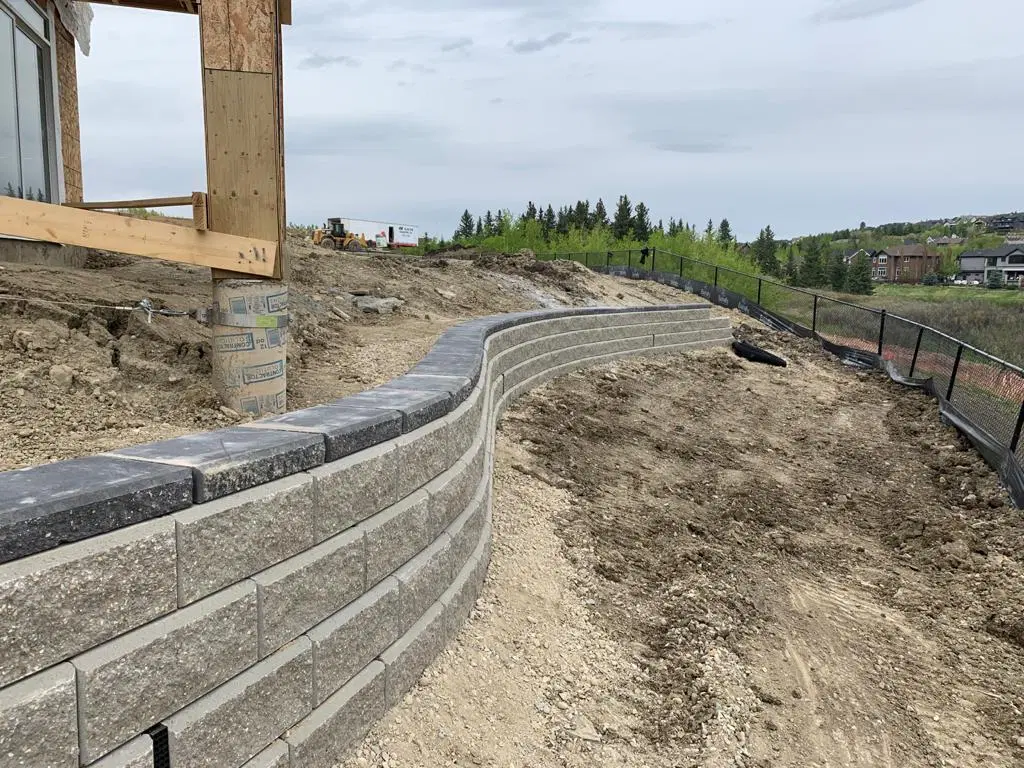
However, for steeper grades, sod alone might not be enough to manage the volume of water moving across the property. This is where structural solutions come into play. Integrating proper terracing or retaining walls installation can break up a steep, unusable slope into flat, manageable tiers.
Retaining walls do more than just hold back earth; they are engineered drainage systems. Behind a properly built wall sits a layer of clear gravel and perforated drainage pipe that captures subsurface water and redirects it harmlessly away. This keeps the soil behind the wall stable and prevents the sod above from becoming waterlogged. Plus, a beautiful natural stone retaining wall adds significant architectural interest and value to your outdoor living space.
Preparing Your Property for the Seasons Ahead
Investing in your landscape requires careful planning and skilled execution. Attempting to tackle severe drainage issues or large-scale grading with rented equipment often leads to ongoing headaches and hidden costs. A professional landscape contractor ensures that the underlying soil mechanics, local municipal water-use by-laws, and precise structural measurements are handled correctly the first time.
As you look toward the fall, take a walk around your property after a heavy rain. Notice where the water sits. Look for exposed roots, muddy patches, or areas where the soil seems to be creeping down a slope. Identifying these issues now gives you the perfect opportunity to correct them before the winter freeze locks everything in place.
At Hoffman Maintenance & Contracting, we pride ourselves on delivering permanent, high-quality solutions for homeowners in The Forest City. Whether you need to fix a chronic drainage issue, stabilize a slope, or simply want to walk barefoot on a pristine new lawn, our team has the local expertise and specialized equipment to bring your vision to life. If you're ready to transform your yard, visit our contact us page to schedule a consultation and take the first step toward a healthier, more beautiful landscape.