
Protecting Your Concrete Driveway from Winter Deicing Damage
Let us face it, winter in London can be incredibly tough on our properties. As the warm weather fades and the short landscaping window closes, our attention rapidly shifts to managing ice and snow. We trade our mowers and pruning shears for shovels and plows, facing a completely different set of logistical challenges. While keeping your property safe and accessible is the top priority during these frigid months, many property owners unintentionally cause thousands of dollars in hidden damage to their hardscaping in the process.
Concrete is highly durable, but it is not invincible. The very products we rely on to melt ice and prevent slips can wreak havoc on your driveway, patios, and walkways if applied incorrectly. The good news is that with a proactive approach to property maintenance, you can keep your surfaces both safe for pedestrians and protected from premature deterioration.
At Hoffman Maintenance & Contracting, we have seen firsthand what harsh chemical melters can do to beautiful hardscapes. Today, we are sharing our professional insights on winter concrete maintenance and spalling prevention so you can protect your investment through the harshest freezing months.
The Science of Spalling: Why Traditional Methods Fail
To understand how to protect your surfaces, it helps to understand exactly what causes the damage. Concrete is a porous material, meaning it absorbs water much like a rigid sponge. During the winter, traditional rock salt (sodium chloride) lowers the freezing point of water, melting the ice sitting on top of your driveway. However, this creates a pool of salty water that seeps into the microscopic pores of the concrete.
When temperatures inevitably drop again, this water freezes and expands by about nine percent. This internal expansion puts immense pressure on the concrete structure. Over repeated freeze-thaw cycles—which we experience frequently in our region—this pressure causes the top layer of the concrete to flake, pit, or pop off entirely. This structural degradation is known as spalling.
Beyond the freeze-thaw cycle, certain chemicals in cheap deicers can chemically react with the cement paste that binds the concrete together, further weakening the surface. This is why simply dumping heavily abrasive rock salt on a frozen driveway is a recipe for disaster. Homeowners often ask how to prevent salt damage on concrete walkways, and the first step is recognizing that what you put on your surface matters just as much as how quickly you clear the snow.

Smarter Alternatives: Choosing the Right Products
The landscaping and property maintenance industry is shifting toward more sustainable and less destructive practices, and winter management is no exception. There is a growing focus on using safe deicing products for concrete driveways that protect local waterways while preserving hardscaping materials.
When comparing anti icing pre treatment vs rock salt, the preventative approach almost always wins. Anti-icing involves applying a liquid brine solution to your concrete before a winter storm hits. This creates a barrier that prevents snow and ice from bonding to the surface in the first place, making physical removal much easier and requiring significantly less chemical application overall. By preventing the bond, you reduce the volume of harsh melters needed to achieve a safe walking surface.
If you must use a granular melter after the snow has fallen, look for blends containing calcium chloride or magnesium chloride rather than plain sodium chloride. These alternatives melt ice at much lower temperatures and are generally less corrosive to your surfaces. Additionally, consider mixing your deicer with sand. While sand does not melt ice, it provides immediate traction, allowing you to use less chemical melter while still maintaining safety.
For those who want to ensure their surfaces are completely protected without the guesswork, utilizing professional deicing services is the safest route. Professionals have access to calibrated equipment and advanced, eco-friendly blends that are specifically formulated to melt ice quickly without eating away at your hardscaping.
Proper Techniques for Long-Lasting Concrete
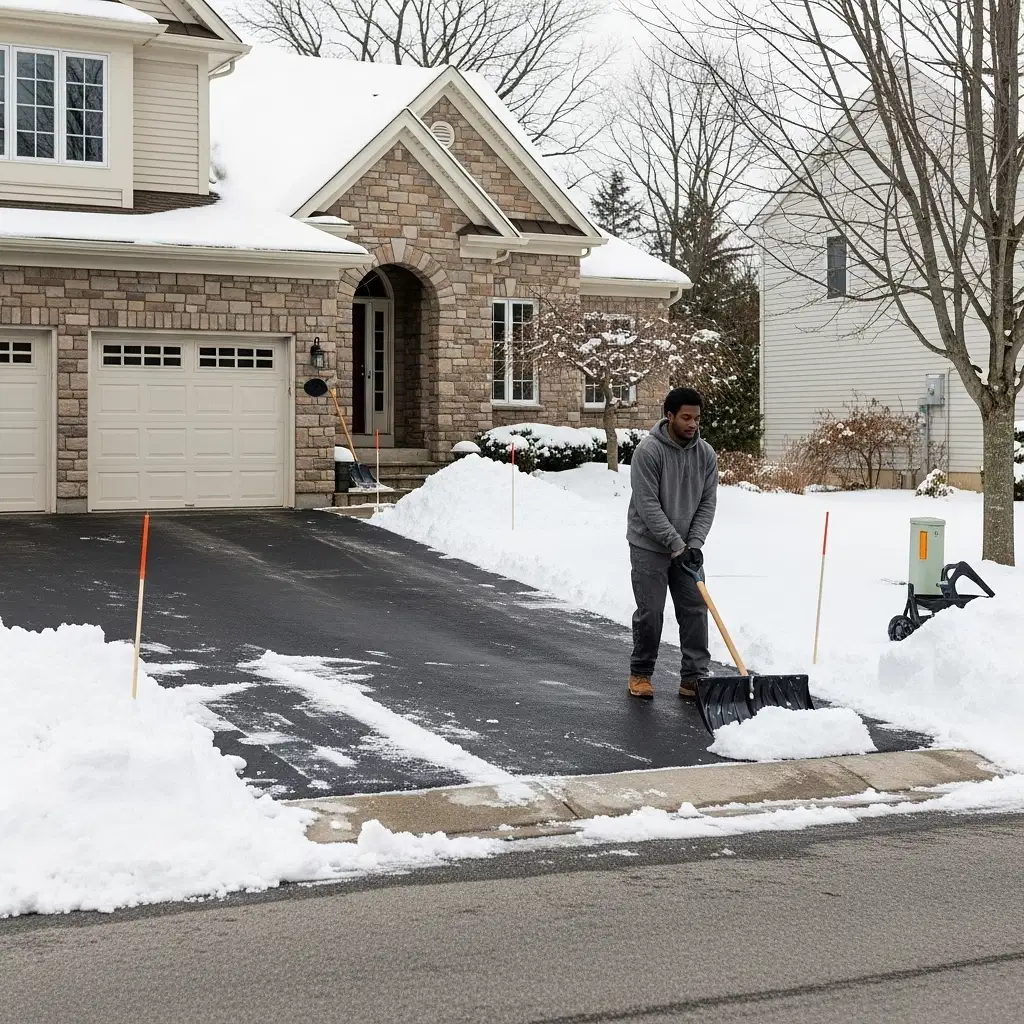
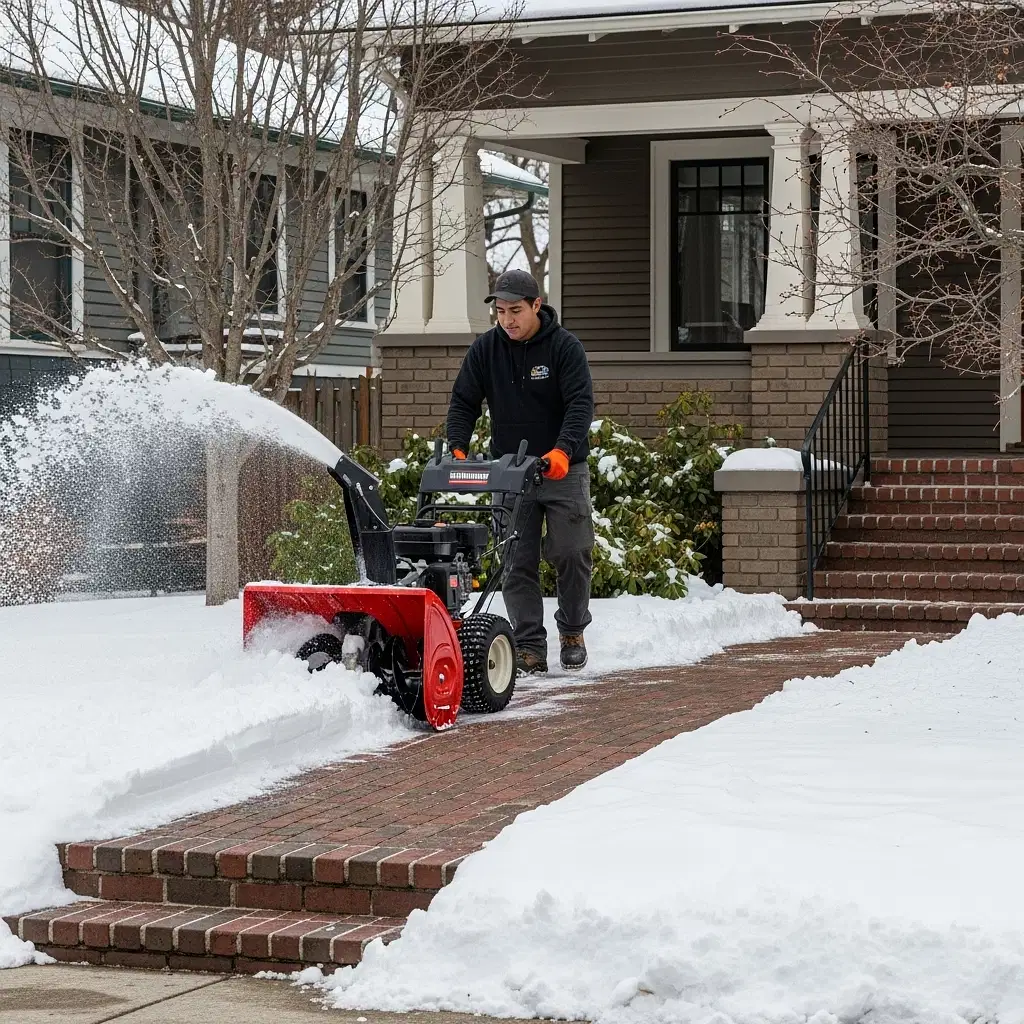
Protecting your hardscaping is not just about the products you use; it is also about your physical snow clearing habits. Timely removal is critical. The faster you remove snow from your concrete, the less chance it has to melt, seep into the pores, and refreeze.
When clearing snow, avoid using heavy metal shovels or aggressively chipping at ice with metal spades. These tools can easily gouge the surface of your driveway, creating entry points for water and chemicals that accelerate deterioration. Instead, opt for plastic shovels with a rubber or polyurethane wear strip.
In today's highly competitive market, many homeowners try to save money by hiring unlicensed, uninsured operators who happen to have a plow attached to their truck. Unfortunately, these operators often lack the training to properly calibrate their equipment. A plow blade dropped too low can cause devastating scratches and gouges to your concrete driveways, patios and walkways. Working with a reputable, fully insured company ensures that the crews managing your property understand the nuances of surface protection and operate properly maintained equipment.
Consistent, professional snow removal prevents snowpack from forming, dramatically reducing the need for heavy chemical intervention. It is a comprehensive strategy that saves you from the massive headache and financial burden of having to repair or replace your driveway prematurely.
Secure Your Property for the Winter
Your concrete driveway and walkways are major investments that enhance your home's curb appeal and functionality. Do not let harsh winter weather and improper maintenance practices cut their lifespan short. By adopting preventative anti-icing strategies, using appropriate materials, and relying on proper physical clearing techniques, you can maintain pristine hardscaping year after year.
At Hoffman Maintenance & Contracting, we pride ourselves on delivering reliable, detail-oriented winter services to the London area. We understand the delicate balance between keeping your property hazard-free and preserving the structural integrity of your landscaping investments.
If you are tired of worrying about hidden damage under the ice or dealing with unreliable contractors, we are here to help. Reach out to our team today via our contact us page to discuss a customized winter maintenance plan that keeps your property safe, beautiful, and fully protected all season long.