
Thriving Gardens in Heavy Clay: A Guide to Native Carolinian Plants
If you have ever tried to dig a hole in your backyard after a long dry spell, or watched in frustration as rainwater pools on your lawn for days after a storm, you are already intimately familiar with one of our region's most common landscaping challenges. Gardening and maintaining a beautiful property in London, Ontario, often means going head-to-head with our notoriously dense, heavy soil.
While it can be frustrating to deal with, this dense earth doesn't have to be the enemy of your dream outdoor living space. In fact, when you understand how to work with it rather than against it, you can cultivate a vibrant, resilient, and eco-friendly landscape. The secret lies in looking to the natural environment around us. By embracing native plants from the Carolinian zone—a unique ecological region that encompasses our area—you can transform a soggy, stubborn yard into a thriving ecosystem.
In this guide, we will explore how to fix yard drainage issues, improve your soil quality, and select the best native plants for Carolinian zone gardens that will naturally flourish in your backyard.
Understanding the Challenge of Heavy Soil
Before we can talk about what to plant, we need to talk about the ground itself. The famous London clay is incredibly dense. Its microscopic particles pack tightly together, leaving very little room for air or water to move through.
During the wet spring months, this density prevents water from draining away, leading to pooling water and soggy lawns. This is a particularly common headache in newer subdivisions where the original topsoil was stripped away during construction, leaving homeowners to deal with the compacted subsoil left behind. Conversely, during the hot, dry weeks of summer, this same soil bakes into a hard, cracked surface that repels water and makes it nearly impossible for delicate, non-native plant roots to penetrate.
However, this dense earth has a hidden superpower: it is exceptionally good at holding onto nutrients. The key to unlocking those nutrients is proper soil conditioning for heavy clay gardens and ensuring your property is shaped to handle water flow correctly.
If your backyard currently feels more like a swamp after a heavy rain, simply dropping new plants into the ground won't solve the problem. The first and most crucial step in any successful landscape design is addressing the topography of your yard. Professional grading and sodding ensures that water is directed away from your home's foundation and distributed evenly across your property, preventing those frustrating localized floods. Once the grading is corrected, you have a blank canvas ready for planting.
The Power of the Carolinian Zone
Southwestern Ontario sits within the Carolinian zone, a unique and incredibly biodiverse ecoregion that shares more in common with the central United States than it does with the rest of Canada. Because of our slightly warmer climate, we can support a stunning variety of flora that won't survive further north.
Choosing native plants for your garden isn't just an eco-friendly landscaping trend; it is a highly practical choice for homeowners who want a beautiful yard without the constant struggle of fighting the local environment. Native plants have spent thousands of years adapting to our specific climate, including our harsh winters, humid summers, and yes, our heavy, nutrient-dense soil.
One of the greatest benefits of native Carolinian plants is their root systems. Unlike typical turf grass or imported ornamental flowers, which have shallow roots, many native prairie and woodland plants develop incredibly deep, robust root systems. As these roots push down into the earth, they naturally break up compacted soil, creating channels for air and water. Over time, simply growing the right plants will actively improve soil quality for your lawn and garden.

Top Native Plant Picks for Dense Soil
When selecting plants for your property, you want species that can handle the "wet feet" of spring and the baked earth of late summer. Here are some of the most resilient and beautiful native options for your garden:
Swamp Milkweed (Asclepias incarnata) Don't let the name fool you; this is a stunning, vibrant plant that produces clusters of bright pink flowers. As the name suggests, it absolutely loves wet conditions, making it perfect for the lower areas of your yard where water tends to gather. Plus, it is a crucial host plant for Monarch butterflies, bringing beautiful pollinators to your outdoor space.
Dense Blazing Star (Liatris spicata) This striking perennial shoots up tall, purple, feather-like spikes that add incredible vertical interest to any garden bed. It thrives in moist, heavy soils and is highly attractive to bees and butterflies. It's an excellent choice for adding a pop of color to a sunny spot in your yard.
Red Osier Dogwood (Cornus sericea) If you are looking for a larger shrub to create privacy or anchor a garden bed, the Red Osier Dogwood is a fantastic native choice. It tolerates poorly drained soils beautifully. Even better, it provides year-round visual interest; after it drops its leaves in the fall, it reveals striking, bright red branches that look spectacular against the winter snow.
Wild Bergamot (Monarda fistulosa) Also known as Bee Balm, this adaptable plant produces unique, crown-like lavender flowers. It is highly tolerant of clay and spreads easily, making it great for filling in large garden beds. The leaves also have a wonderful minty fragrance when crushed.
Integrating Native Plants with Functional Hardscaping
While native plants do the heavy lifting of improving your soil and managing moisture, they look their absolute best when paired with structured, professional hardscaping. The contrast between the wild, lush growth of Carolinian plants and the clean, architectural lines of stonework creates a truly modern and inviting outdoor living space.
For properties with uneven terrain—such as the hilly landscapes often found in neighborhoods like Byron—terracing is an incredibly effective way to manage water runoff and prevent erosion. By installing natural stone retaining walls, you can create elevated, flat planting beds. These raised beds allow you to amend the soil more easily and provide better drainage for plants that might need a slightly drier environment, giving you the best of both worlds.
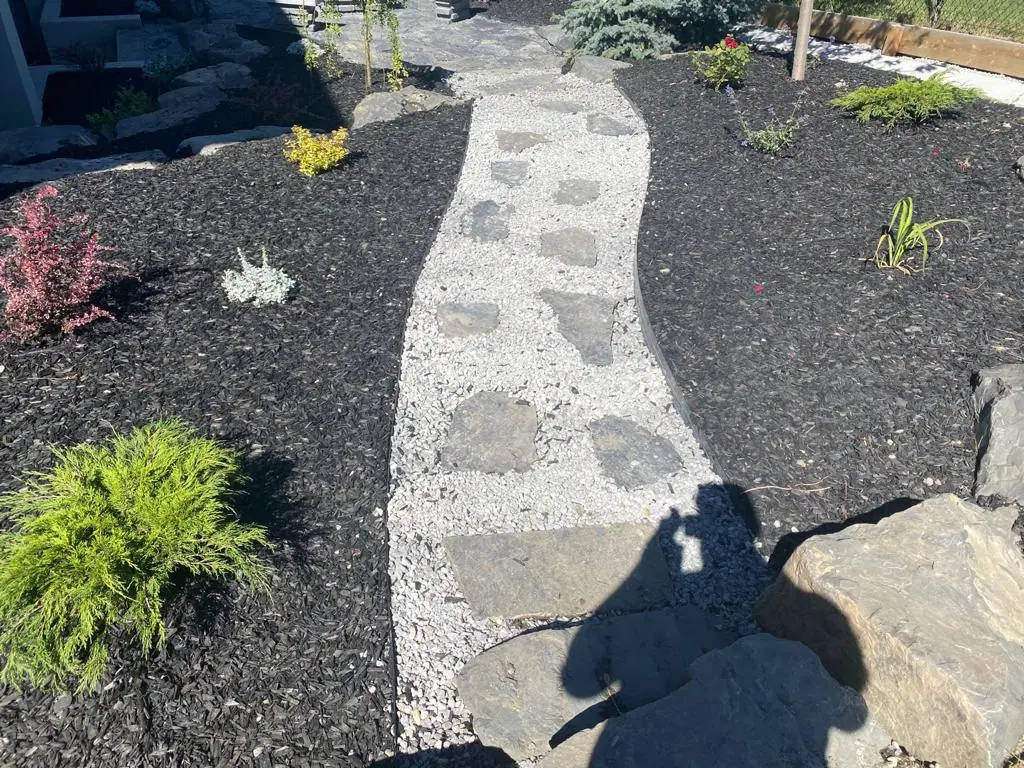
Natural stone pathways winding through your native garden not only provide a beautiful aesthetic but also give you functional access to your yard without compacting the soil further under heavy foot traffic.
Of course, a beautiful garden is only one part of your property's curb appeal. To keep the entire landscape looking pristine, the wilder, natural look of native garden beds should be balanced with neatly manicured turf. Investing in professional residential lawn maintenance ensures that your grass remains healthy, properly aerated, and sharply edged, providing a clean frame that makes your native garden beds truly stand out.
Ready to Transform Your Yard in The Forest City?
Dealing with heavy, poorly draining soil doesn't mean you have to settle for a lackluster backyard. By addressing your property's grading, utilizing the deep-rooting power of native Carolinian plants, and incorporating smart hardscape design, you can turn a frustrating yard into a stunning, low-maintenance oasis that supports local wildlife.
At Hoffman Maintenance & Contracting, we understand the unique environmental challenges and opportunities of our region. Whether you need to completely regrade a soggy lawn, build a beautiful natural stone retaining wall, or simply want reliable, high-quality lawn care services to keep your property looking its best, our team is here to help.
Ready to stop fighting your soil and start enjoying your outdoor space? Contact us today to schedule a consultation and let's bring your landscaping vision to life.